

Many people start a business with the expectation of freedom—freedom of time, income, and lifestyle. In reality, however, things often turn out differently. Many business owners, especially in familiar models like nail salons, beauty salons, or restaurants, end up becoming even busier than before. Daily operations, staff management, customers, and constant issues can pull them into a cycle where they rarely have time to step back and see the bigger picture.
The difference between self-employment and a true business comes down to two core elements: operations and growth. Strong operations allow the business to run smoothly without constant dependence on the owner. Growth ensures there is enough cash flow to sustain, expand, and generate profit. Without one or the other, a business cannot develop sustainably.
To achieve both, one foundation is essential: understanding your financial numbers. This is the practical answer to the question of building a profitable business—not based on feelings or effort alone, but on data and decision-making grounded in that data.
Why Numbers Matter
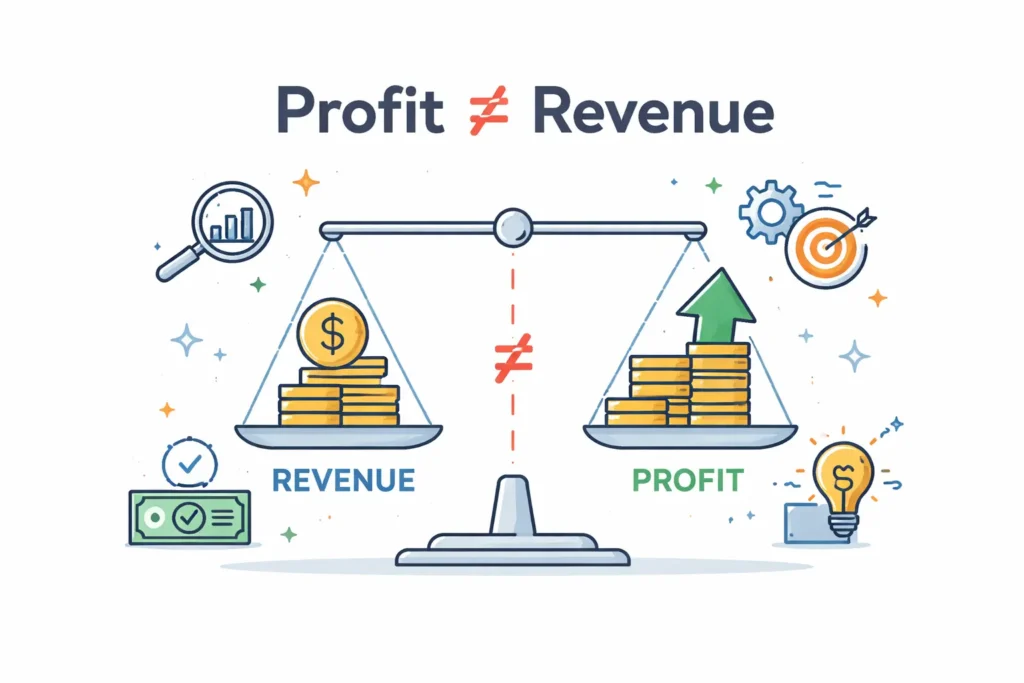
Many business owners operate based on intuition: today feels busy, this month feels slower, this week required more work. But intuition is often inaccurate and influenced by short-term impressions.
Financial numbers are different. They reflect reality objectively:
- How many customers were served this week?
- What was the total revenue?
- What were the costs—rent, payroll, supplies?
- What is the actual profit after expenses?
Without data, a business is operating on hope. And you cannot improve what you do not measure.
1. Customer Acquisition Cost (CAC)
CAC is the cost required to acquire a new customer. It is one of the most important metrics in marketing.
For example, if you spend $200 on advertising and gain 40 new customers, your CAC is $5 per customer. Once you know this number, marketing becomes predictable rather than uncertain.
CAC also helps compare different channels:
- Paid ads may bring higher volume
- Referrals may bring higher-quality customers
If CAC is too high, the business may grow without becoming profitable. When CAC is optimized, the business can scale more efficiently with the same budget.
2. Customer Lifetime Value (LTV)
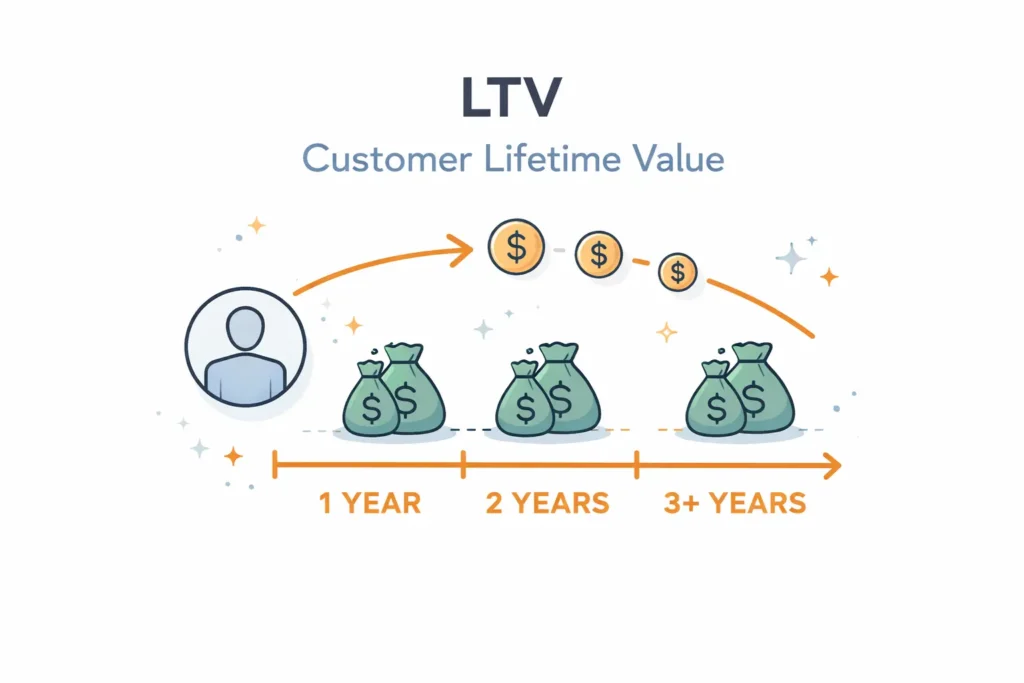
TV measures the total value a customer brings over the entire time they stay with your business.
In service industries like nail salons or beauty salons, LTV is often high because customers return regularly. A customer spending $50 per visit every few weeks can generate thousands of dollars over time.
Understanding LTV changes how you view customers:
- Not as a single transaction
- But as a long-term relationship
It also improves marketing decisions. If a customer is worth $3,000 over time, spending $50–$100 to acquire them can be entirely reasonable.
3. Payback Period
The Payback Period measures how long it takes to recover the cost of acquiring a customer.
For example:
- If it costs $20 to acquire a customer and they spend $50 on the first visit → immediate payback
- If they only spend $15 initially → recovery depends on future visits
This metric is directly tied to cash flow. A business may be profitable long term but still face financial pressure if cash does not return quickly enough.
A shorter Payback Period means:
- Lower risk
- Faster reinvestment opportunities
A longer Payback Period requires careful cash flow management to avoid liquidity issues.
4. Customer Retention Rate
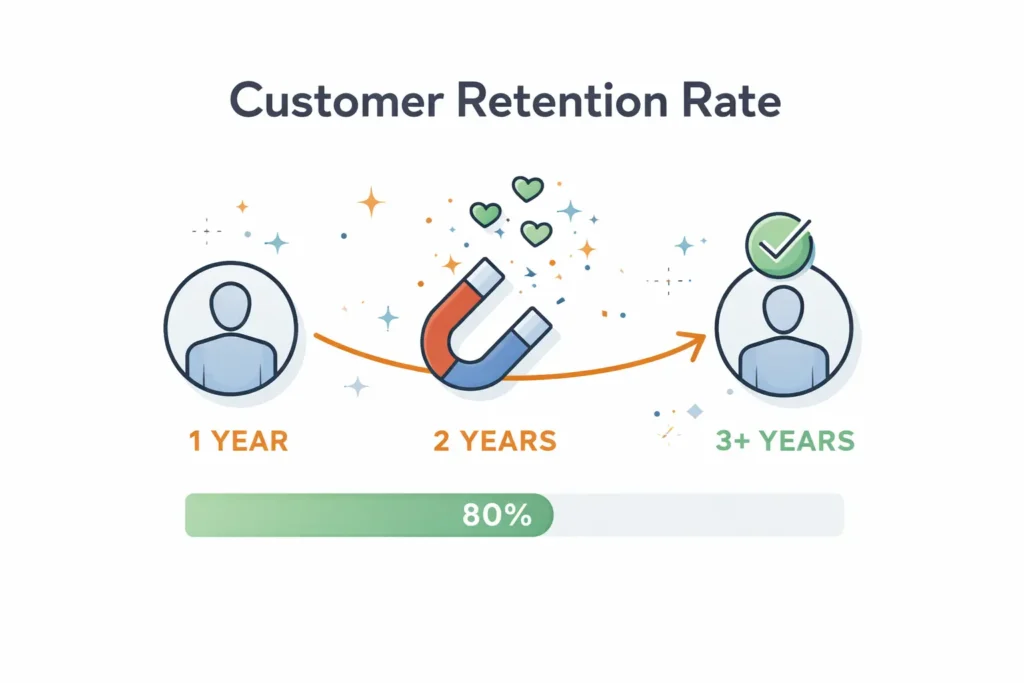
Acquiring new customers is important, but retaining them is what creates stability.
Retention Rate measures the percentage of customers who return. For example:
- 100 new customers but only 30 return → low retention
- 80–90% return → much stronger business stability
Returning customers:
- Reduce marketing costs
- Create consistent revenue
- Increase LTV
Retention depends not only on product or service quality but also on the overall experience—service consistency, attention to detail, and how customers feel.
5. Return on Investment (ROI)
ROI measures the effectiveness of your business decisions. It answers a critical question: are your efforts and investments truly worth it?
Examples include:
- Expanding your location
- Hiring more staff
- Increasing marketing spend
The key question is not whether to invest, but whether the results justify the cost.
ROI should be evaluated over the long term, especially in industries with seasonality. Monthly results can be misleading, while quarterly or annual views provide clearer insight.
ROI helps:
- Guide strategic decisions
- Avoid emotional or reactive choices
- Focus on activities that create real value
Final thoughts: How to build a profitable business

Building a profitable business is not just about working harder—it is about working strategically. Metrics like CAC, LTV, Payback Period, Retention Rate, and ROI are not just financial terms; they are tools that reveal where your business stands and how it should move forward.
When these numbers are understood and tracked:
- Decisions become clearer
- Risks are better managed
- Growth becomes more sustainable
A real business is not built on intuition alone, but on clarity, structure, and the ability to act on real data.